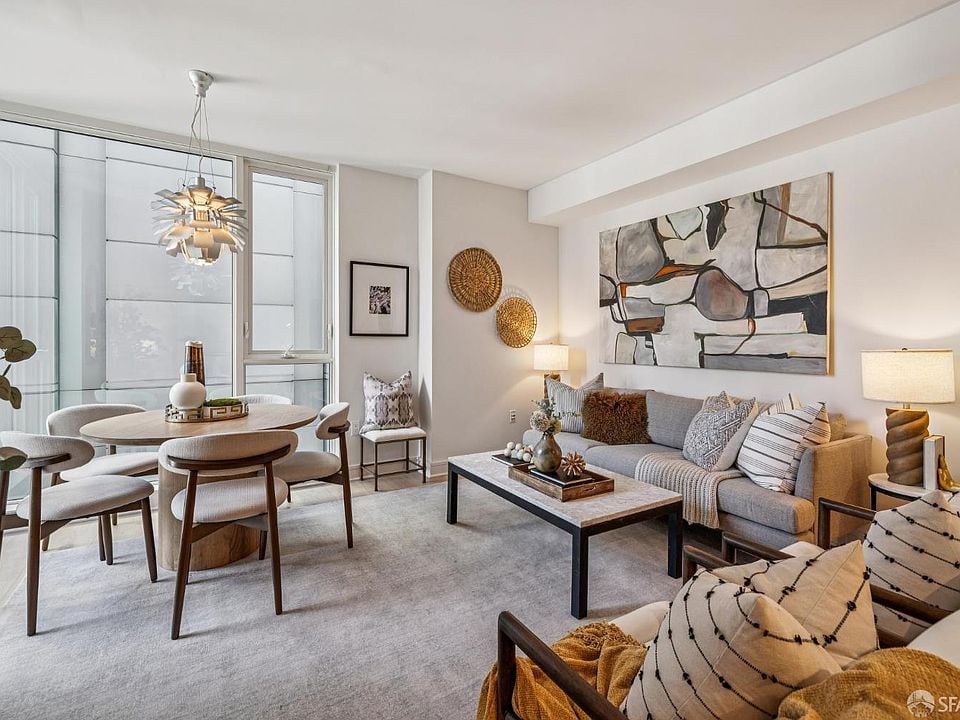
Should You Buy a Condo or Single-Family Home in San Francisco?
Buyer-Focused Brooke Lau September 15, 2026
Buyer-Focused Brooke Lau September 15, 2026
If you are thinking about buying a home in San Francisco in 2026, one of the biggest decisions you may face is not simply where to buy, but what type of property to buy.
Should you purchase a condo with shared amenities and less exterior maintenance? Or should you stretch your budget for a single-family home with more privacy, outdoor space, and control over the property?
There is no one-size-fits-all answer. Condos and single-family homes come with different costs, responsibilities, financing considerations, and lifestyles.
In San Francisco, you may also come across Tenancy in Common, or TIC, properties, which can look and feel similar to condos but have a different ownership structure.
Here is what San Francisco buyers should consider in 2026.
The San Francisco housing market remains expensive and competitive. Over the three months ending August 2026, the median sale price across all home types was approximately $1.59 million, with homes selling in about 20 days on average, according to Redfin. (Redfin)
But looking at the citywide median does not tell you what you will experience when shopping for a condo versus a single-family home.
Property type, neighborhood, condition, parking, outdoor space, HOA structure, and building quality can all significantly affect price and resale.
For many buyers, price is the first consideration.
Condos can provide an opportunity to buy into neighborhoods where a comparable single-family home may cost significantly more. Current San Francisco listings demonstrate the wide range of condo price points, with many condos listed below the city's overall median home price. (Redfin)
Single-family homes generally come with more land, privacy, and control, but those features can come at a premium.
The important question is not simply:
Can I afford the purchase price?
It is:
What will my total monthly and annual cost of ownership be?
That includes your mortgage, property taxes, insurance, HOA dues if applicable, maintenance, utilities, and potential future assessments.
One of the biggest differences between condos and single-family homes is the HOA.
With a condo, your monthly HOA dues may cover some combination of:
HOA dues can make a condo's monthly cost higher than the purchase price alone suggests.
But that does not necessarily mean the money is being wasted. Some of those expenses represent costs that a single-family homeowner would have to pay directly.
For example, a single-family homeowner may not have an HOA, but they are still responsible for maintaining the roof, exterior, landscaping, plumbing, and other components of the property.
This is where condos can be attractive to buyers who want less responsibility for the exterior of their home.
With a condo, the HOA generally handles many common areas and building components according to the governing documents.
With a single-family home, you typically have more direct responsibility for the property.
That can mean more freedom, but it can also mean more unexpected expenses.
A buyer considering a single-family home should budget for ongoing maintenance rather than assuming the mortgage is the only major housing expense.
It is tempting to assume that single-family homes will always appreciate more than condos.
Real estate is more complicated than that.
Appreciation depends on factors such as:
A well-located condo in a desirable neighborhood can perform differently from a condo in a building with high HOA costs or significant deferred maintenance.
Likewise, a single-family home with major functional or location drawbacks may not perform the same way as another house nearby.
Instead of asking which property type appreciates more in general, look at the specific property and its comparable sales.
Resale is something buyers should think about before they buy, not five years later when they decide to move.
Consider who is likely to want your property when you eventually sell.
For a condo, factors such as HOA dues, building reserves, insurance, parking, amenities, rental restrictions, and the overall condition of the building can affect buyer demand.
For a single-family home, factors such as lot size, parking, outdoor space, floor plan, condition, and potential for expansion may influence resale appeal.
The more future buyers you can reasonably appeal to, the more flexibility you may have when it is time to sell.
Parking can be a major factor in San Francisco.
A condo may come with a deeded parking space, leased parking, shared parking, or no parking at all.
A single-family home may have a garage, driveway, or no dedicated parking depending on the neighborhood and property.
If parking is important to you, do not simply look at whether a listing says "parking."
Ask:
Parking can affect both your daily lifestyle and the property's future resale appeal.
Outdoor space is another major difference.
A single-family home may offer a private backyard, patio, deck, or garden.
A condo may have a private balcony, shared garden, roof deck, or no meaningful outdoor space.
Think about how you actually live.
Do you want space for a dog?
Do you garden?
Do you entertain?
Do you want somewhere to sit outside on a sunny afternoon?
Those lifestyle preferences can be more important than simply comparing square footage.
San Francisco buyers will also encounter TICs, or Tenancy in Common properties.
A TIC is not the same as a condo.
With a condominium, each unit is generally its own legally separated parcel with its own Assessor's Parcel Number.
With a TIC, multiple owners share ownership of one legal parcel. The San Francisco Assessor's Office specifically notes that TIC co-owners share responsibility for the property's overall property tax bill, while condominium units have separate parcels and tax bills. (SF Media)
The ownership structure can also affect financing and the relationship between co-owners.
That does not automatically make a TIC right or wrong for a buyer. It means you should understand exactly what you are purchasing.
If you are considering a TIC, review the TIC agreement, financing structure, property documents, insurance, and any other relevant disclosures with your real estate and legal professionals before moving forward.
One of the most important things condo buyers should investigate is the possibility of a special assessment.
An HOA may need additional funds for major repairs, insurance costs, building improvements, or other expenses that are not fully covered by regular dues and reserves.
For example, California condominium documents can provide for special assessments under certain circumstances. (San Francisco Government)
This is why I would not recommend looking at HOA dues alone.
A $500 monthly HOA does not necessarily tell you whether a building is financially healthy.
When reviewing a condo, buyers should pay attention to items such as:
A lower HOA fee is not automatically better if the association is underfunded.
Insurance deserves special attention in today's market.
For condominiums, the HOA typically carries insurance for certain common areas and building components, while individual owners generally need their own coverage for their unit and personal property according to the governing documents.
The exact division of responsibility depends on the building's governing documents and insurance policies.
San Francisco condominium documents can also address how association insurance premiums are incorporated into regular assessments and how owners must maintain individual insurance. (San Francisco Government)
Before purchasing a condo, ask to review the association's insurance information and understand what is and is not covered.
For a single-family home, you generally have more direct responsibility for obtaining and maintaining the property's insurance coverage.
This is the part that gets overlooked.
Imagine your normal Tuesday.
Do you want to walk downstairs and leave for work without thinking about exterior maintenance?
A condo may fit that lifestyle.
Do you want a backyard, more privacy, a garage, or the ability to make changes to your property without dealing with an HOA?
A single-family home may fit better.
Do you love being in the middle of a neighborhood where you can walk to restaurants, coffee shops, parks, and transit?
A condo may allow you to prioritize location over lot size.
The right choice depends on how you want to live.
Factor | Condo | Single-Family Home |
|---|---|---|
Purchase price | Often lower entry point | Often higher |
HOA dues | Usually required | Usually none |
Exterior maintenance | Shared through HOA | Owner responsibility |
Privacy | Typically less | Typically more |
Outdoor space | Varies | Often more |
Parking | Varies significantly | Garage, driveway, or street |
Special assessments | Possible | No HOA assessment, but repairs are your responsibility |
Building decisions | Subject to HOA rules | More owner control |
Resale | Influenced by building and HOA | Influenced heavily by land, location, condition |
Lifestyle | Lower-maintenance | More control and privacy |
Start with your priorities.
A condo may make sense if you want to prioritize location, lower entry price, amenities, and less responsibility for exterior maintenance.
A single-family home may make sense if privacy, outdoor space, parking, land, and greater control over the property are high priorities.
A TIC may be worth considering if you are comfortable with its specific ownership and financing structure and the property fits your goals.
None of these options is automatically the right choice for every San Francisco buyer.
The most important thing is to compare the total cost, risks, responsibilities, and future resale considerations of the specific properties you are considering.
When you find a property you love, don't stop at the listing photos and asking price.
Look at the disclosures.
Review the HOA documents.
Understand the insurance.
Investigate reserves and potential assessments.
Compare recent sales.
Look carefully at parking and outdoor space.
And think about whether you would still be happy owning the property several years from now.
Buying a home is a major financial decision, and the right property is not necessarily the one with the lowest price or the most square footage.
It is the property that fits your budget, lifestyle, and long-term goals.
If you are comparing San Francisco condos, single-family homes, or TICs in 2026, I would be happy to help you evaluate the differences and understand what to look for before you make an offer.
Thinking about buying in San Francisco? Let's talk about what makes sense for you.
Real estate conditions, HOA requirements, insurance costs, financing options, and property values can change. This article is for general educational purposes and is not legal, tax, insurance, or financial advice. Buyers should consult the appropriate professionals regarding their individual circumstances.

Buyer-Focused
If you have been searching for a home in San Francisco, you may have come across the term TIC.

Buyer-Focused
Buying a condo in San Francisco can be a great way to own a home in the city, but there is more to evaluate than the unit itself.
Buyer-Focused
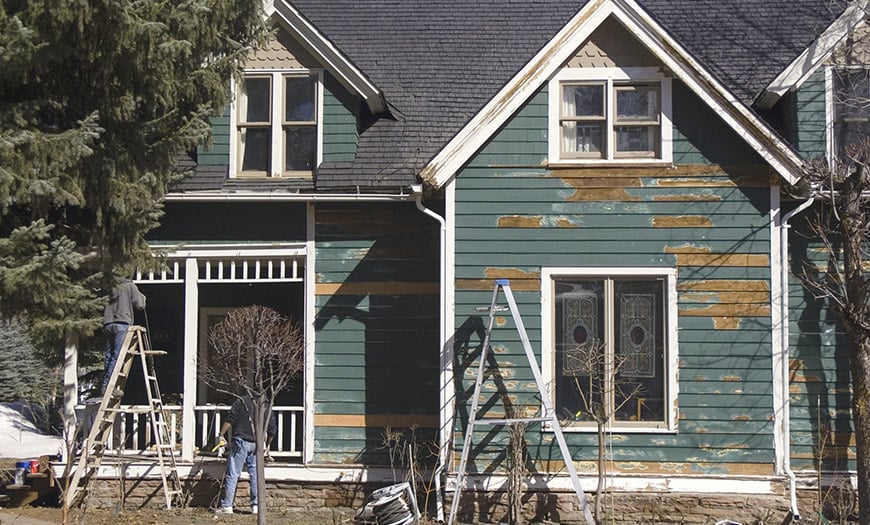
Buying a fixer-upper in the San Francisco Bay Area can be an opportunity to buy into a neighborhood you might otherwise be priced out of, create a home that fits your … Read more

Buyer-Focused
Buying a home in the San Francisco Bay Area isn't simply about choosing a city. It's about finding the right balance between budget, commute, lifestyle, space, and lon… Read more

Buyer-Focused
If you have a $1 million budget for a home in the San Francisco Bay Area, where you choose to live can make a significant difference in what that budget looks like.
Pacifica Content
Pacifica is known for its coastal scenery, beaches, hiking trails, and relaxed community feel. But if you’re considering moving here, one of the most important things … Read more

Buyer-Focused
Buying your first home is a big step, and buying in Pacifica comes with its own considerations. From understanding your budget and financing options to evaluating coas… Read more

Buyer-Focused
San Francisco may be a small city geographically, but each neighborhood can feel like its own little world.
Buyer-Focused
Buying your first home is exciting, but buying in the San Francisco Bay Area can feel especially complicated.
Get assistance in determining current property value, crafting a competitive offer, writing and negotiating a contract, and much more. Contact me today.