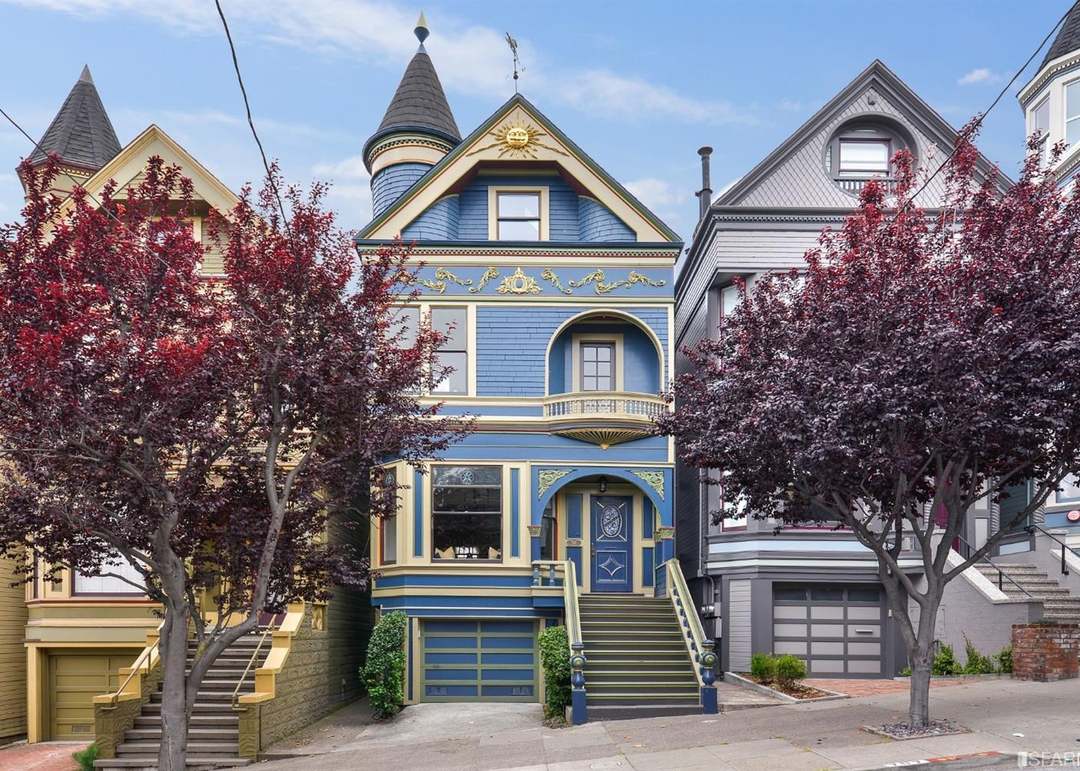
Is 2026 a Good Time to Buy a Home in the San Francisco Bay Area?
Buyer-Focused Brooke Lau September 15, 2026
Buyer-Focused Brooke Lau September 15, 2026
Should I buy a home in San Francisco in 2026? Is now a good time to buy in the Bay Area? What is happening with mortgage rates, inventory, and home prices?
If you have been thinking about buying a home in the San Francisco Bay Area, you have probably heard conflicting advice.
Some buyers are waiting for mortgage rates to come down. Others are concerned that home prices could continue rising. And in some neighborhoods, buyers are still competing against multiple offers even while other properties sit on the market longer.
So, is 2026 a good time to buy a home in the Bay Area?
The answer depends less on trying to perfectly time the market and more on your financial situation, your timeline, the property you want, and the specific market you are shopping in.
The San Francisco Bay Area is not one single real estate market. San Francisco, the Peninsula, and the East Bay can behave very differently.
Here is what buyers should know about the 2026 Bay Area housing market.
As of September 2026, buyers are navigating a market with relatively high mortgage rates, limited inventory in many areas, and significant variation from one neighborhood to another.
Freddie Mac reported that the average 30-year fixed mortgage rate was 6.76% as of September 10, 2026, up from 6.35% a year earlier. These are national averages, so your actual rate will depend on factors including your credit, loan type, down payment, and lender. (Freddie Mac)
At the same time, inventory has not expanded enough to create a uniformly buyer-friendly market. C.A.R. reported that the San Francisco Bay Area had 2.3 months of housing supply in July 2026, the tightest level among California's five major regions. Active listings across the state were also down 9.3% from a year earlier. (California Association of Realtors)
But the story becomes more interesting when you look at individual markets.
San Francisco, for example, has remained particularly competitive. Redfin reported that during the three months ending August 2026, San Francisco homes sold for a median of approximately $1.59 million, up 13.7% year over year, with homes selling in about 20 days on average. (Redfin)
That means buyers should not assume that higher mortgage rates automatically mean lower prices or less competition.
Mortgage rates are one of the biggest factors affecting Bay Area buyers in 2026.
The 30-year fixed mortgage rate averaged 6.76% nationally as of September 10, according to Freddie Mac. (Freddie Mac)
For buyers, even a relatively small change in the interest rate can significantly affect the monthly payment.
For example, Freddie Mac illustrates that a $300,000 mortgage at 6.5% has a principal-and-interest payment of approximately $1,896 per month, compared with approximately $1,996 at 7%. Your actual payment will vary based on your loan amount, taxes, insurance, HOA dues, and other costs. (My Home)
This creates an important question:
Should you wait for mortgage rates to come down?
There is no guarantee that rates will fall on your preferred timeline.
And even if mortgage rates eventually decline, lower rates could bring more buyers back into the market. That could increase competition for the homes that are most desirable.
For some buyers, the strategy may be to purchase a home that works financially at today's rate and consider refinancing later if their circumstances and future market conditions make refinancing beneficial.
That should never be assumed, however. Refinancing involves costs and depends on future rates, your finances, and lender approval.
Inventory is one of the most important things Bay Area buyers should watch.
More inventory generally means buyers have more homes to choose from and potentially more negotiating opportunities. Less inventory can create competition, particularly for well-priced homes in desirable locations.
C.A.R.'s July 2026 report showed that the Bay Area had 2.3 months of unsold inventory, compared with 3.7 months statewide. San Francisco had the largest year-over-year decline in active listings among California counties tracked by C.A.R., with listings down 41.5% from July 2025. (California Association of Realtors)
However, inventory is not evenly distributed.
A renovated single-family home in a highly desirable San Francisco neighborhood can attract a very different level of attention than an older condo with a high HOA fee.
This is why looking only at a Bay Area-wide inventory number can be misleading.
The answer depends on where you are looking.
C.A.R.'s July 2026 data showed that the San Francisco Bay Area's median price declined 1.2% from July 2025, but San Francisco County itself recorded a 25.2% year-over-year increase in its median price. C.A.R. attributed San Francisco's price strength in part to exceptionally tight inventory and strong demand, particularly at the higher end of the market. (California Association of Realtors)
Redfin's August data similarly showed strong year-over-year price growth in San Francisco, with the median sale price up 13.7%. (Redfin)
This is a good example of why buyers should be careful with headlines saying either:
"Bay Area home prices are rising!"
or
"Bay Area home prices are falling!"
Both can be misleading without knowing the specific city, neighborhood, property type, and price range.
Yes, in some parts of the Bay Area.
Compass's August 2026 Northern California market report found that competition remained stronger than a year earlier, with the share of sales closing above list price increasing year over year in all 14 counties it tracked. At the same time, August also brought seasonal cooling, with closings declining year over year in 13 of 14 counties and months of supply increasing from July in 13 counties. (Compass)
In other words, the market can be both competitive and more negotiable depending on the property.
That is an important distinction.
A buyer may encounter multiple offers on a beautifully renovated home that is priced appropriately, while having considerably more negotiating room on a property that has been sitting on the market, needs work, or has a pricing strategy that is not attracting buyers.
In certain situations, yes.
Buyers should not assume that every home will require a bidding war.
Properties that have been sitting on the market longer may provide opportunities to negotiate on:
But negotiating power is highly property-specific.
If five buyers want the same home, your negotiating position is very different from a situation where a home has been available for several weeks without an offer.
The key is understanding why a property is sitting and what comparable homes have actually sold for.
One of the biggest mistakes buyers can make is treating the entire Bay Area as one market.
San Francisco has been one of the stronger Bay Area markets in 2026.
C.A.R. reported a 25.2% year-over-year increase in San Francisco County's median home price in July, while active listings were down significantly from the prior year. (California Association of Realtors)
Redfin's August data also showed strong price growth and homes selling in approximately 20 days on average. (Redfin)
For buyers, that can mean:
A buyer looking at a condo in SoMa, a single-family home in Glen Park, and a TIC in the Inner Sunset could be experiencing three very different markets despite shopping in the same city.
The Peninsula also remains a market where location, property type, and price point matter enormously.
Markets throughout San Mateo County can range from condos and townhomes to high-value single-family homes and luxury properties.
The 2026 market has also shown strong demand in parts of the Peninsula. Recent market reporting has highlighted continued strength in San Francisco and Peninsula housing markets, particularly at higher price points. (The Business Journals)
For buyers considering the Peninsula, it can be worthwhile to compare communities based on:
The East Bay is also not one single market.
Oakland, Berkeley, Alameda, Walnut Creek, Fremont, Contra Costa communities, and other areas can have very different inventory levels, prices, buyer pools, and property types.
Recent Bay Area reporting has also shown that the 2026 market has been uneven, with some markets benefiting more from strong technology-sector demand than others. (The Business Journals)
For buyers, this means the East Bay can offer a different set of options depending on your budget and priorities.
If your budget feels stretched in San Francisco or on the Peninsula, expanding your search may allow you to compare more housing types and neighborhoods rather than simply waiting for prices to change.
There is no universal answer, but buying may make sense for someone who:
Plans to stay for several years
Buying generally involves significant transaction costs, so a buyer should consider how long they realistically expect to own the property.
Has stable finances
You should be comfortable with the monthly payment, property taxes, insurance, HOA dues if applicable, maintenance, and other costs.
Has a realistic budget
Don't build your budget around the hope that rates will fall or that your income will increase.
Has found the right property
The right home in the right location at a price that works for your finances can be more important than trying to identify the exact bottom or top of the market.
Is financially prepared for competition
In some Bay Area neighborhoods, buyers still need to be prepared to move quickly when a well-priced property comes onto the market.
Waiting may make sense for someone who:
The goal should not be to buy simply because it is 2026.
The goal should be to buy when the home, the numbers, and your personal circumstances make sense together.
This is one of the biggest questions buyers have right now.
If rates fall significantly in the future, refinancing may become an option for some homeowners.
But it is important not to purchase a home based solely on the assumption that you will refinance later.
Instead, ask:
Can I comfortably afford this home today?
If the answer is yes, then future rate changes become an opportunity to evaluate later rather than something your purchase depends on.
This is another reasonable concern.
No one can guarantee what home prices will do over the next year or several years.
Real estate values can move differently by neighborhood, property type, and price range.
Instead of trying to predict the exact bottom, buyers should focus on purchasing a property they can afford and expect to own long enough to weather normal market fluctuations.
There is no single answer for every Bay Area buyer.
The 2026 market is a mix of higher borrowing costs, limited inventory in many areas, strong demand in certain communities, and increased opportunities to negotiate on some properties.
San Francisco has shown particularly strong price performance and tight inventory, while other parts of the Bay Area have experienced more moderate conditions. (California Association of Realtors)
That means the better question may not be:
"Is 2026 the right year to buy?"
Instead, ask:
"Is this the right time for me to buy this particular home in this particular neighborhood at this particular price?"
That is where local market analysis becomes important.
Before making an offer, look at recent comparable sales, current competition, days on market, price reductions, property condition, HOA information if applicable, financing costs, and your own long-term plans.
And don't be afraid to ask questions.
If you're considering buying in San Francisco, the Peninsula, Pacifica, Daly City, or the East Bay, I’m happy to help you understand what the market looks like for the specific neighborhoods and property types you're considering.
You don't have to be ready to make an offer to start the conversation.
A good first step can simply be figuring out:
What can I comfortably afford, where should I be looking, and what does my budget actually buy me in today's market?
Market conditions and mortgage rates change frequently. The information in this article is for general educational purposes and is not financial, legal, or tax advice. Mortgage rates cited are national averages and may not reflect the rate available to an individual borrower. Buyers should consult with qualified lending, tax, and legal professionals regarding their individual circumstances.
Buyer-Focused
If you have been searching for a home in San Francisco, you may have come across the term TIC.

Buyer-Focused
Buying a condo in San Francisco can be a great way to own a home in the city, but there is more to evaluate than the unit itself.
Buyer-Focused
Buying a fixer-upper in the San Francisco Bay Area can be an opportunity to buy into a neighborhood you might otherwise be priced out of, create a home that fits your … Read more

Buyer-Focused
Buying a home in the San Francisco Bay Area isn't simply about choosing a city. It's about finding the right balance between budget, commute, lifestyle, space, and lon… Read more
Buyer-Focused
If you have a $1 million budget for a home in the San Francisco Bay Area, where you choose to live can make a significant difference in what that budget looks like.
Pacifica Content
Pacifica is known for its coastal scenery, beaches, hiking trails, and relaxed community feel. But if you’re considering moving here, one of the most important things … Read more
Buyer-Focused
Buying your first home is a big step, and buying in Pacifica comes with its own considerations. From understanding your budget and financing options to evaluating coas… Read more
Buyer-Focused
San Francisco may be a small city geographically, but each neighborhood can feel like its own little world.
Buyer-Focused
Buying your first home is exciting, but buying in the San Francisco Bay Area can feel especially complicated.
Get assistance in determining current property value, crafting a competitive offer, writing and negotiating a contract, and much more. Contact me today.